 Mind Your Body Podcast

Most people with chronic pain are told their problem is structural. A herniated disc. Arthritis. Tissue damage that needs fixing.
But in 85% of cases, no physical cause can be found.
The real problem isn’t in your tissues. It’s in how your nervous system learned to interpret signals from your body.
I see this pattern constantly. Someone experiences an injury. It heals. But the pain persists. Six months. Two years. A decade.
What’s actually happening is a neural hijacking.
Your brain isn’t broken. It’s protecting you in a way that no longer serves you.
When Your Limbic System Takes Over Pain Processing

Accurate pain interpretation requires cross talk between your somatosensory cortex and prefrontal cortex.[1] These regions work together to assess what’s actually happening in your tissues.
But in chronic pain, something shifts.
Peripheral and central sensitization develop.[2] Your anterior cingulate cortex and limbic system start dominating the conversation. The insular cortex, amygdala, and hippocampus process emotions, mood, and memory.[3]
They develop learned associations to pain. They activate survival and threat reactive systems every time you experience discomfort.[3]
This leads to more suffering. More physiologic and physical guarding patterns. These patterns restrict movement, which perpetuates pain.
The cycle feeds itself.
On the surface, it may not look different from acute pain. But underneath, there’s a constellation of changes.
Fear-avoidant beliefs. Rumination and catastrophizing. A decrease in hope and optimism about getting out of pain.
People start identifying with their diagnosis. With being a pain patient.
Movements that previously caused pain become impossible. Not because the tissue can’t handle it, but because the brain anticipates threat.
But here’s what gives me hope…
The Shrinking Safe Zone
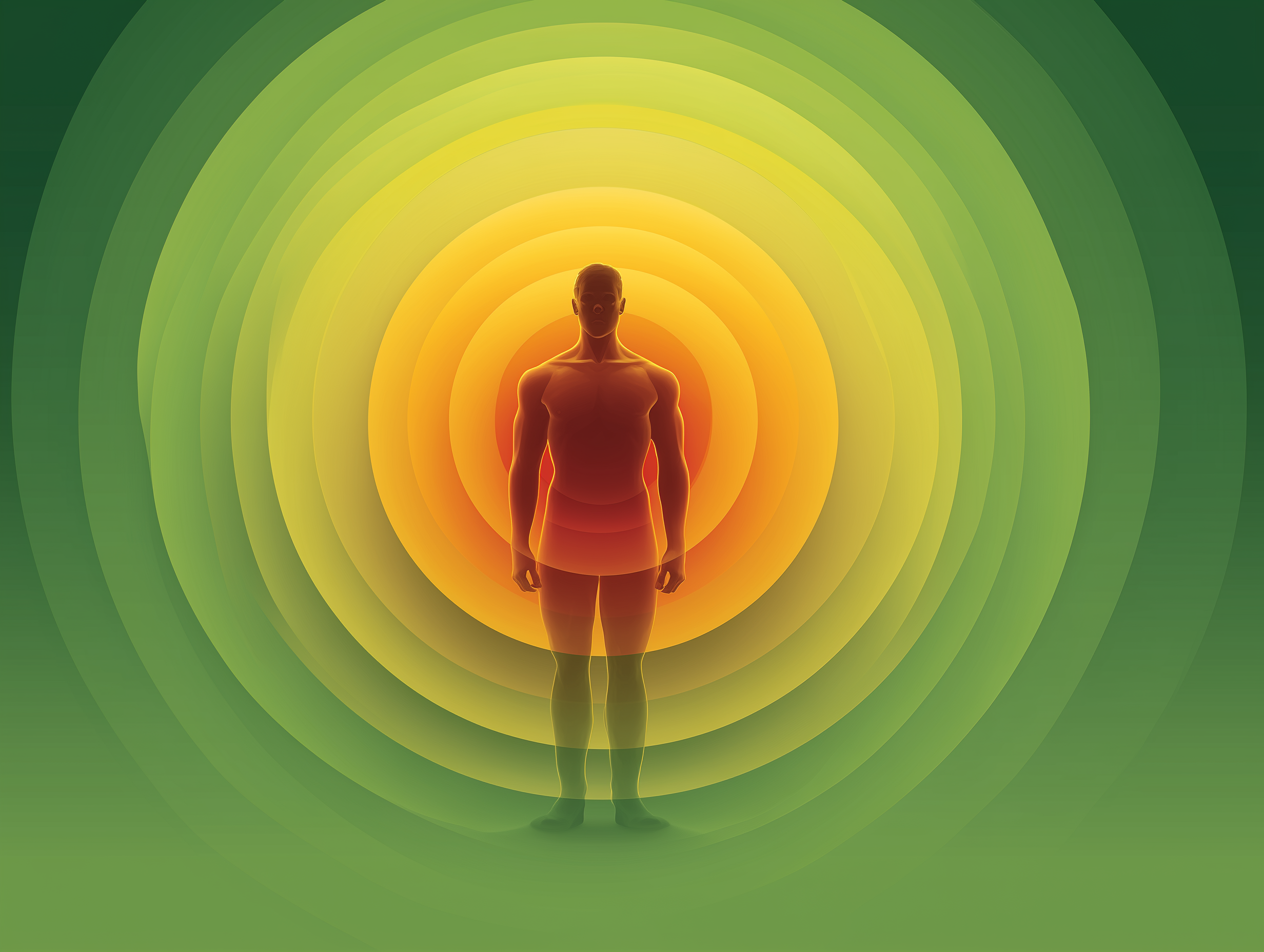
This anticipation mechanism is what I call “moving the needle.”
Here’s how it works. Let’s say you experienced pain raising your shoulder to 90 degrees. Your nervous system tags that movement as dangerous.
Next time, at 85 degrees, you start to guard. You experience pain before you even reach the angle that originally hurt.
This is survival sensitization. Your brain is trying to protect you.
But if this happens again, the needle moves further. Now pain shows up at 80 degrees. Then 75. Then 70.
Eventually, you can become paralyzed by anticipation. The safe zone keeps shrinking until almost any movement triggers the threat response.
This is predictive pain. Your brain creates real physical pain from memory and expectation alone.
The hypervigilance that develops amplifies everything. The constant monitoring. The need to fix it. The fighting or figuring it out.
All of this feeds the cycle. It amplifies the intensity of perceived pain and the chronicity of the condition.
“The very act of trying to fix your pain can amplify it. The monitoring becomes the mechanism.”
Why Standard Pain Management Fails
When we treat chronic pain as a structural problem, we miss the mechanism entirely.
We need to first identify the actual sources of pain generation and label them accurately. We differentiate which clinical or imaging findings are clinically relevant and which are incidental.
We identify which findings are secondary, present as a result of guarding patterns, but not primary sources of pain.
Then we identify impaired motor patterns, relative weaknesses, body habits that will be addressed with rehabilitation.
But here’s the critical step. We need to demonstrate that the body retains the capacity to feel less or no pain in that area.[4]
This might mean noting periods when pain waxes and wanes. Or providing an intervention like an injection or medication to diminish pain, even temporarily.
This demonstration creates buy-in for rehabilitation. It removes pain as a barrier to participation.
Most importantly, it breaks the tendency to guard in anticipation of pain. It allows patients to surrender to movement and trust their body.
To move without the constant anticipation that pain may come back or intensify at any moment.
Surrender isn’t giving up. It’s giving your body permission to heal.
Building New Neural Pathways
Trust doesn’t happen overnight. This takes time. It requires repetition, like the science of changing habits.
Patients need to establish consistent memories of painless or pain-free sensations in previously sensitized regions. They need visceral buy-in that sensations can feel safe again.
A return to hypervigilance or increased pain may initially present as part of extinction burst patterns. The nervous system fights back when you try to change these pain patterns.
This is where guidance from trained professionals becomes essential. Those with training in Pain Reprocessing Therapy and other pain psychology modalities help patients through these moments.[4]
We dip our feet very slowly and in small increments. We warn patients ahead of time that extinction bursts happen. We teach them to trust the process.
When pain spikes during healing, it’s not proof you’re getting worse. It’s proof your nervous system is changing.
And critically, we avoid somatic tracking during periods of high pain experiences.
The Difference Between Awareness and Amplification
Somatic tracking is not the same thing as mindfully practicing interoception.
Somatic tracking involves leaning into painful stimuli and seeking it out. Either through imagined or actual movements that trigger pain. The goal is to reappraise the sensation in the moment as safe.
But it needs to be done without a sense of urgency and intensity. With equanimity and curiosity instead.
In cases of high pain experiences, this becomes very difficult and counterintuitive.
The key is creating a pause when initially experiencing pain. Allowing time to recognize the pain and allow it to be there. Noticing it with curiosity.
This creates space for the prefrontal cortex to activate. To bypass the predominant early reactive response from the limbic system.[1],[3]
With this pause, we get more accurate interpretation of pain sensations. Less predictive pain input from our emotional and memory centers.
We can apply language, logic, and rational thought. We enable better crosstalk with our somatosensory cortex receiving input directly from our peripheral body.
We bring awareness into our body so we can experience the sensation with more visceral accuracy and precision.
“Between stimulus and response there is a space. In that space is our power to choose our response. In our response lies our growth and our freedom.” — Viktor Frankl
The Physiological Sigh

This is where the physiological sigh becomes powerful.
It’s a method of shifting autonomic nervous system states. It reduces overactivation of the sympathetic state and stimulates the parasympathetic state, increasing vagal tone.
Research from Stanford shows that cyclic sighing produces greater mood improvement than mindfulness meditation.[5] Participants experienced a daily increase in positive affect of 1.91 points for breathwork versus 1.22 points for mindfulness over 28 days.
The mechanism is clear. Extended exhalations activate the parasympathetic nervous system by increasing vagal tone.[5] This triggers the release of acetylcholine, which promotes higher heart rate variability and an overall calming effect.
When patients start using this technique regularly, they typically notice emotional reactivity shift first. The anxiety, fear, frustration, and tension begin to ease.
This is followed by simultaneous reduction of pain intensity and associated symptoms that coincide with a dysregulated nervous system. Gastrointestinal issues. Fatigue.
The sequence matters. Emotional and physiological symptoms shift first. Then pain intensity follows.
The Gut-Brain Connection
When someone’s nervous system has been in chronic sympathetic overdrive, their entire system suffers.
Sympathetic overdrive increases activity in the HPA axis, keeping them in a chronic stress response.[6] This impacts blood flow and immune responses throughout the body.
Increased levels of cortisol have both short and long-term effects.[6] Relative adrenal fatigue can develop.
If someone progresses into a freeze or dorsal vagal shutdown state, a different set of symptoms emerges. Increased social isolation. Flattened affect. Anhedonia.
More catastrophizing. Learned helplessness and hopelessness. Increased physical, mental, emotional, and cognitive fatigue.
General overwhelm. Irritability or apathy. Decreased heart rate variability and psychophysiologic coherence.
These are two very different dysregulated states. Sympathetic overdrive versus dorsal vagal shutdown.
Climbing the Autonomic Ladder

Most people initially respond with an activated threat response via the sympathetic nervous system. But based on window of tolerance, allostatic load, and trauma history, some may not be able to maintain that state for very long.
If the threat has persisted too long or becomes overwhelming, the dorsal vagal state becomes a last resort survival mechanism.
Through the autonomic hierarchy, one must climb through the sympathetic state to get to the ventral vagal state.[7] The state of connection, calm, confidence, social engagement, and curiosity.
It’s not atypical to fluctuate or even blend different states. But in the context of ongoing perceived threat like chronic pain, it can be difficult to find anchors of safety.
Anchors to keep one grounded and within their windows of tolerance.
You don’t need to fix yourself. You need to find your way back to safety.
Stacking Glimmers of Safety
I use methods taught by Deb Dana and Dr. Stephen Porges in Polyvagal Theory.[7] We find glimmers of safety throughout the day.
Our hippocampus tags emotionally charged memories.[8] We need to stack more positive ones in our memory banks.
This reduces the dominance of negatively charged memories that contribute to our fatalism and emotional reactivity when experiencing a negative sensation.
For someone oscillating between sympathetic activation and dorsal vagal shutdown, whose body has become synonymous with threat, this practice becomes transformative.
We’re essentially building a new memory bank. Stacking positive, safe experiences to counterbalance years of threat memories.
What Transformation Actually Looks Like

When I look at someone who’s done this work successfully over months, who’s built up those safety memories and shifted their nervous system state, the change is profound.
Their relationship with pain transforms. Not just the intensity, but how they think about it, respond to it, and move through their day with it.
There’s more patience and understanding. Less blame and intensity. More self-compassion.
The evidence supports this. In a randomized controlled trial of Pain Reprocessing Therapy, 66% of patients were pain-free or nearly pain-free at post-treatment, compared with 20% for placebo injections and 10% for usual care.[9]
At one-year follow-up, the treatment effects largely held. 52% of PRT patients were still at 0 or 1 out of 10 on the pain scale.[9]
The average duration of pain in these patients was 10 years.
Brain imaging showed that when people in the PRT group were exposed to pain in the scanner post-treatment, brain regions associated with pain processing had quieted significantly.[9] The anterior insula and anterior midcingulate showed measurably reduced activity.
This is neuroplasticity in action.[2],[10] The same mechanism that created the chronic pain pattern can be redirected to create new pathways.
Pathways of safety. Of accurate interpretation. Of trust in movement.
The nervous system that learned to amplify pain can learn to regulate it. To interpret signals accurately again. To recognize safety and connection.
But it requires understanding the mechanism. Using evidence-based interventions. Building new memories slowly and consistently.
And most importantly, it requires patience and self-compassion as the nervous system relearns what it forgot.
That your body can be a place of safety again.
Key Takeaways
-
Chronic pain is often neuroplastic, not structural. In 85% of cases, no physical cause exists.
-
Your nervous system learns pain patterns through central sensitization, creating a self-perpetuating cycle.
-
Predictive pain is real pain. Your brain creates physical sensations from memory and anticipation alone.
-
The physiological sigh shifts nervous system states, reducing sympathetic overdrive and increasing vagal tone.
-
Emotional symptoms change first, followed by pain reduction. Trust the sequence.
-
Building new neural pathways takes time. Extinction bursts are part of healing, not regression.
-
Stacking glimmers of safety creates a new memory bank that counterbalances threat associations.
-
66% of Pain Reprocessing Therapy patients became pain-free or nearly pain-free, even after 10 years of chronic pain.
Your Actionable Steps This Week
1. Practice the Physiological Sigh (3-5 times daily)
Two deep inhales through your nose, followed by one extended exhale through your mouth. Do this when you notice tension, anxiety, or pain beginning to rise.
2. Create a Pause Before Reacting to Pain
When pain arises, pause for 10 seconds. Notice the sensation with curiosity rather than urgency. Ask: “What am I actually feeling right now?” This activates your prefrontal cortex.
3. Track Your Glimmers of Safety
Identify three moments each day when your body feels even slightly safe or comfortable. Write them down. A warm shower. Petting your dog. Laughing with a friend. You’re building new neural pathways.
4. Notice When Pain Waxes and Wanes
Pay attention to times when pain decreases or disappears, even briefly. This demonstrates to your nervous system that pain isn’t constant or inevitable.
5. Reframe Extinction Bursts
When pain spikes during your healing work, remind yourself: “This is my nervous system changing, not proof I’m getting worse.” Expect this. Trust the process.
A Question for Reflection
When you think about your pain journey, which resonates more with your current experience?
A) I’m stuck in sympathetic overdrive (constant anxiety, hypervigilance, fighting the pain)
B) I’m in dorsal vagal shutdown (exhausted, hopeless, feeling depleted)
C) I fluctuate between both states
D) I’m starting to find moments of ventral vagal safety (calm, curious, connected)
Understanding where you are on the autonomic ladder helps you know which interventions will serve you best.
Final Thoughts
“Your pain is real. Your suffering is valid. And your nervous system’s capacity to heal is greater than you’ve been told.”
The journey from chronic pain to regulation isn’t linear. There will be setbacks. Extinction bursts. Moments when you doubt the process.
But remember this: the same neuroplasticity that created your pain pattern can redirect it. Your nervous system learned to amplify pain. It can learn to regulate it.
This isn’t about positive thinking or willpower. It’s about understanding the mechanism and applying evidence-based interventions consistently.
You’re not broken. You’re sensitized. And sensitization can be reversed.
One breath at a time. One glimmer at a time. One moment of trust at a time.
Your body remembers how to feel safe. You’re just helping it remember.
About the Author
Dr. Zev Nevo is a double board-certified physiatrist, chronic pain survivor, and founder of the Body & Mind Pain Center. He helps people with persistent pain rebuild capacity and confidence using an evidence-based, trauma-informed mind-body rehabilitation approach.
Listen: Mind Your Body Podcast
Learn & Join: Mind-Body Rehabilitation Community
Visit the Clinic: Body & Mind Pain Center
Medical Disclaimer
The information in this article is for educational and informational purposes only and is not intended as a substitute for professional medical advice, diagnosis, or treatment. Always seek the advice of a qualified healthcare provider with any questions you may have regarding a medical condition. Never disregard professional medical advice or delay in seeking it because of something you have read in this article. New or changing pain symptoms should always be properly evaluated by a medical professional.
References
-
Apkarian AV, Bushnell MC, Treede RD, Zubieta JK. Human brain mechanisms of pain perception and regulation in health and disease. European Journal of Pain. 2005;9(4):463-484. doi:10.1016/j.ejpain.2004.11.001
-
Ji RR, Nackley A, Huh Y, Terrando N, Maixner W. Neuroinflammation and central sensitization in chronic and widespread pain. Nature Reviews Rheumatology. 2025;21(1):1-18. https://www.nature.com/articles/s12276-025-01409-0
-
Bushnell MC, Ceko M, Low LA. Cognitive and emotional control of pain and its disruption in chronic pain. International Journal of Molecular Sciences. 2013;20(13):3130. doi:10.3390/ijms20133130 https://www.mdpi.com/1422-0067/20/13/3130
-
Wager TD, Atlas LY. The neuroscience of placebo effects: connecting context, learning and health. Cleveland Clinic Journal of Medicine. 2023;90(4):245-253. https://www.ccjm.org/content/90/4/245
-
Balban MY, Neri E, Kogon MM, et al. Brief structured respiration practices enhance mood and reduce physiological arousal. Cell Reports Medicine. 2023;4(1):100895. doi:10.1016/j.xcrm.2022.100895 https://pmc.ncbi.nlm.nih.gov/articles/PMC9873947/
-
McEwen BS, Bowles NP, Gray JD, et al. Mechanisms of stress in the brain. Nature Neuroscience. 2025;28(2):1-15. https://pmc.ncbi.nlm.nih.gov/articles/PMC11839829/
-
Porges SW. The polyvagal theory: phylogenetic substrates of a social nervous system. International Journal of Psychophysiology. 2001;42(2):123-146. https://pmc.ncbi.nlm.nih.gov/articles/PMC5736941/
-
Squire LR, Dede AJ. Conscious and unconscious memory systems. Cold Spring Harbor Perspectives in Biology. 2015;7(3):a021667. doi:10.1101/cshperspect.a021667
-
Ashar YK, Gordon A, Schubiner H, et al. Effect of pain reprocessing therapy vs placebo and usual care for patients with chronic back pain: a randomized clinical trial. JAMA Psychiatry. 2022;79(1):13-23. doi:10.1001/jamapsychiatry.2021.2669 https://www.nih.gov/news-events/nih-research-matters/retraining-brain-treat-chronic-pain
-
Seminowicz DA, Wideman TH, Naso L, et al. Effective treatment of chronic low back pain in humans reverses abnormal brain anatomy and function. European Journal of Pain and Neuropathic Pain. 2022;16(4):1-12. https://ejnpn.springeropen.com/articles/10.1186/s41983-022-00472-y