 Mind Your Body Podcast
TL;DR: Chronic pain isn’t always a danger signal. When pain persists without clear structural cause, your nervous system may be using it as a messenger, highlighting boundary violations, values misalignment, or overwhelm. A 3-step approach rooted in Pain Reprocessing Therapy helps you decode what your body is actually saying, and research shows 66% of chronic pain patients became pain-free or nearly pain-free using this method.
-
Chronic pain can function like an alarm clock, grabbing attention rather than signaling active danger.
-
The nervous system learns to use pain as a communication tool when other signals are ignored.
-
Three common messages: boundary violations, values misalignment, and pushing through overwhelm.
-
Reappraising pain from a curious observer perspective can shift its intensity in real time.
-
Recovery isn’t pain management. It’s full nervous system recalibration, and it’s possible.
We’re taught to think of pain as a warning signal. A blaring alarm that something is damaged, broken, or wrong.
For acute injury, that’s exactly right.
But when chronic pain develops, something more complex is happening. The nervous system isn’t just warning you of danger anymore. It’s trying to get your attention.
What if your pain isn’t the problem? What if it’s the solution your body found when nothing else worked?
I’ve spent years working with patients who have chronic pain alongside mental health struggles, trauma histories, and nervous system dysregulation. The patterns became impossible to ignore.
These weren’t just people with injured tissues. They were people with boundary issues, self-compassion deficits, and lives full of insurmountable stressors.
Their pain was real. But it was serving a purpose beyond signaling tissue damage.
Here’s what most doctors won’t tell you about chronic pain…
Chronic Pain: The Alarm Clock vs. The Smoke Detector
Both make loud, obnoxious sounds. Both demand immediate attention.
But the meaning behind each is fundamentally different.
A smoke detector signals danger. Act now or face consequences.
An alarm clock signals that you’re at risk of neglecting something important. It reminds you to wake up, attend a meeting, take your medication, or honor a commitment.
The alarm clock isn’t threatening. It’s helping you pay attention to what matters.
When chronic pain persists without clear structural cause, your nervous system may be functioning more like an alarm clock than a smoke detector. It’s using pain as a tool to grab your attention, even without active tissue damage.
This is neuroplastic pain, also called mind-body pain or central sensitization. And it’s trying to tell you something.
Research confirms that chronic physical and emotional pain share overlapping neural pathways [1]. The brain regions processing chronic pain look remarkably similar to those activated in trauma responses.
Brain imaging studies reveal that chronic pain involves extensive neuroplasticity alterations affecting neurons tied to pain, mood, and thinking [2]. The medial prefrontal cortex, which processes negative emotions and detects unfavorable outcomes, becomes hyperactive in chronic pain states.
Your nervous system has learned that pain works. It gets results.
Your pain has a job. And it’s been doing that job perfectly.
Key Point: Chronic pain is not always a structural problem. When it persists without clear tissue damage, the nervous system may be using pain as a messenger, not a danger signal.
How Chronic Pain Sensitization Develops
When you experience an injury, your nervous system calls a meeting.
It reviews the footage. What went wrong? What did I miss? What could I have done differently?
Then it sharpens its skills. It aims to react earlier and with more force next time. It re-implements protective strategies that helped in the past.
Most importantly, it learns to predict patterns so it can avoid pain before it even occurs.
This shows up as physical protective mechanisms, postural habits, and decision-making patterns aimed at keeping you safe. Your brain tags emotionally-charged memories for easy retrieval, flagging them the moment you face something that resembles a past threat.
This is pain sensitization. And it’s supposed to protect you.
But what happens when your protector becomes your prison?
Central sensitization becomes a slippery slope. You end up paralyzed by fear of pain, even when there is none. You overanalyze and intensify your own pain perception through hypervigilance.
The nervous system learns the wrong lesson. It prepares for threats that no longer exist.
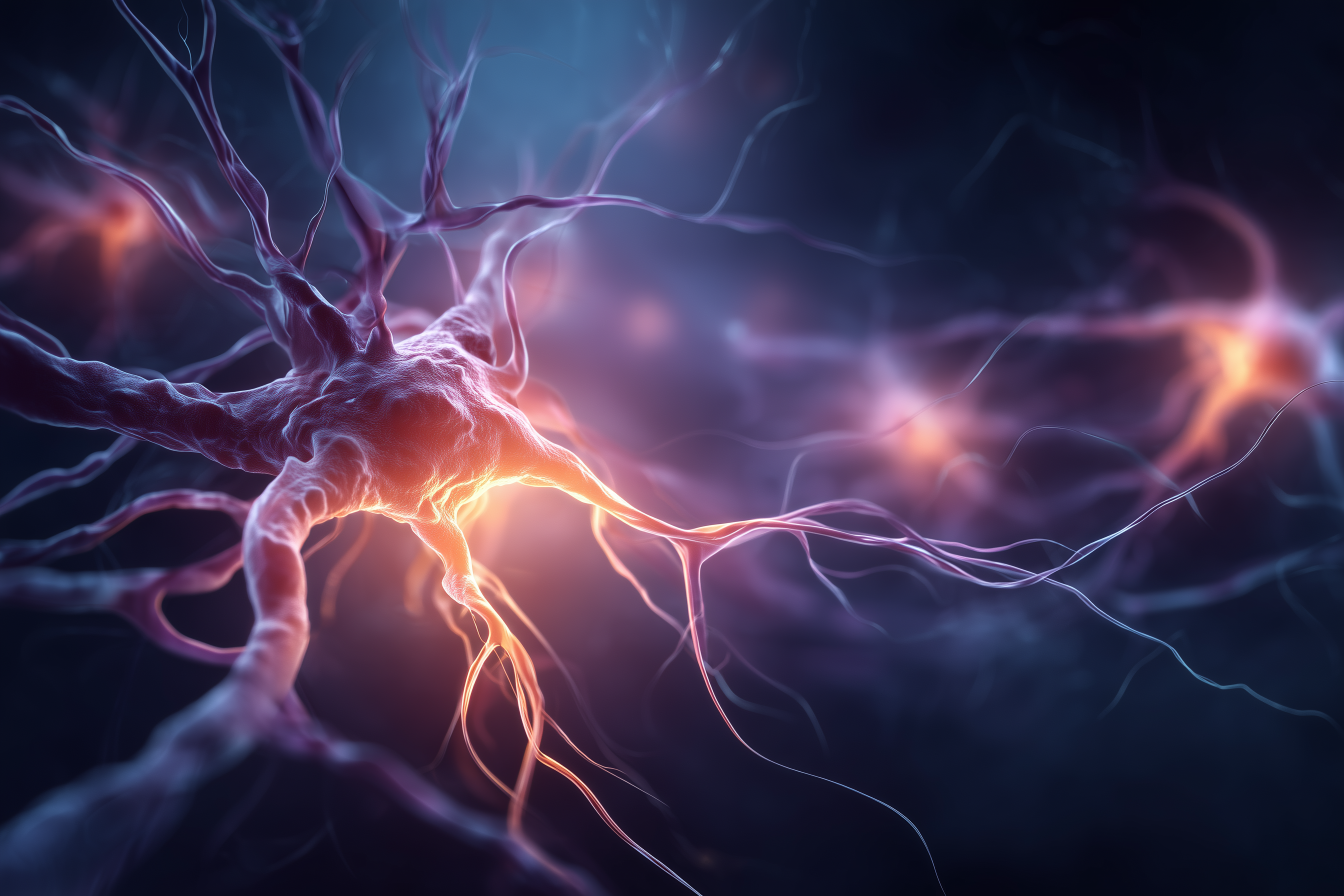
Research published in Nature confirms that central sensitization creates maladaptive neuroplasticity where neurons gradually become oversensitive to pain stimuli [3]. Cortical networks reallocate cognitive and emotional resources to pain processing, making it the brain’s primary focus.
And letting down those defenses? That feels too vulnerable.
The pain you know feels safer than the freedom you don’t.
This cycle can persist for months or years, long after the original injury has healed.
Importantly, studies show that appropriate pain treatment can reverse these pathological neural structural alterations in chronic pain [2].
Which means there’s hope. Real, evidence-based hope.
Key Point: Chronic pain sensitization is a learned pattern. The nervous system prepares for threats that no longer exist, creating a cycle of hypervigilance that can be unlearned.
The Hidden Functions of Chronic Pain
This is where it gets uncomfortable.
I see patients whose entire daily schedules revolve around their pain. Appointments, rehabilitation, specific foods, exercise routines that should bring pleasure but become obligations in the name of “getting better.”
The attention and care received from being in pain becomes a valid source of nurture and comfort. And that can be genuinely difficult to let go of.
Chronic pain creates permission structures.
It shelters you from a stress-inducing boss or coworker. It frees up time for rest and respite. It gives you grounds to establish limits you couldn’t set before.
Suddenly you can say no to things you never wanted to do in the first place.
Pain can bring previously unattainable empathy and compassion from emotionally absent partners or family members. It can replace a lack of fulfillment or purpose with a pain identity that excuses and releases societal, cultural, or financial pressures.
There’s comfort in the chaos. At least it’s familiar.
Sometimes pain is the only language we have left to say “I need help.”
Understanding these secondary gains doesn’t invalidate your pain experience. It reveals why chronic pain treatment requires addressing both physical and psychological factors.
The pain is absolutely real. But the nervous system is remarkably intelligent about using it as a communication tool when other signals have been ignored.

Research on chronic pain as learning and memory proposes that persistent suffering depends critically on motivational and emotional brain circuitry [4]. The pain becomes less somatic and more affective in nature, representing a departure from traditional views that focus solely on physical signals.
Key Point: Chronic pain often serves hidden functions including permission to rest, boundary enforcement, and emotional connection. Recognizing these patterns is not dismissing the pain. It’s the first step to addressing its root cause.
Three Common Messages Behind Chronic Pain
When I work with patients to reverse-engineer what their pain affords them, three categories emerge consistently.
Boundary violations. People-pleasing behaviors and feeling taken advantage of in relationships or situations. Pain finally gives you permission to establish limits you couldn’t set on your own.
Values misalignment. You’re not living authentically across life domains: financial, spiritual, relational, creative, or energetic. Pain creates space to reassess without judgment.
Overwhelm and pushing through. Physical, mental, emotional, or cognitive fatigue states. This pattern is especially common in overly self-critical people, high achievers, and those who self-sabotage to reach arbitrary measures of success.
The frustrating truth? I haven’t been able to map which message shows up where in the body.
These patterns are especially common in chronic back pain, fibromyalgia, chronic headaches, and other persistent pain conditions.
There’s no chart that says lower back pain equals boundary issues or migraines equal values misalignment.
This requires detective work. Reverse-engineering what the pain is protecting or providing. And most of the time, patients already intuitively know.
You’re not broken. You’re brilliant. Your nervous system found a way to protect you.
Now we’re going to teach it there’s a better way.
I’m not a guru enlightening anyone. I’m holding the flashlight so you can look within and identify what you already understand.
Key Point: Three consistent pain messages are boundary violations, values misalignment, and overwhelm. The specific location of pain doesn’t predict the message. That’s why this work requires individual detective work, not a formula.
How to Decode Chronic Pain Messages: A 3-Step Approach

When an alarm goes off, you don’t just silence it. You ask questions.
What day is it? What time is it? Did I set this alarm? Is there a reason it went off right now?
You give meaning, purpose, and context to the sound.
The same process applies to chronic pain.
Step 1: Identify the source. Where is the sensation? What does it feel like? Notice it without judgment.
Step 2: Name and label it. Use language to add identifiers. This activates your prefrontal cortex, which applies logic and rationality to counter the reactive patterns of your limbic system.
Step 3: Apply context. Why now? Did something physical explain this? Was there recent emotional distress or social stress that seems to increase the pain?
Have you been dealing with more stress? Have you enabled overstimulation through endless scrolling or divisive news? Have you been attending to self-care, nutrition, movement, and sleep?
These questions create a pause.
That pause? That’s where healing begins.
Important: This approach is for chronic pain without ongoing tissue damage, not acute injuries or conditions requiring medical attention. Always consult a healthcare provider to rule out serious underlying conditions. Qualitative research analyzing patient experiences with Pain Reprocessing Therapy identified three major treatment mechanisms: reappraisal to reduce fear of pain, insight into the pain-emotion connection, and therapeutic alliance [5]. Patients described how observing sensations from a curious observer perspective allowed pain perception to shift in real time.
These steps help you recognize and normalize all sensations as neutral, filed in a “to be determined” folder until you interpret them accurately.
This isn’t about dismissing severe pain or thinking differently during a crisis. When pain is intense, follow your instincts. You don’t want to miss a genuine new injury.
This process is preventative desensitization work. It’s for moments when you feel little or no pain, retraining your nervous system’s interpretation patterns before the alarm sounds again.
Research on Pain Reprocessing Therapy (PRT) demonstrates this works. In a landmark study, 66% of chronic back pain patients became pain-free or nearly pain-free after learning to reappraise their pain [6]. And 52% maintained those improvements one year later.
When you observe pain from the vantage point of a curious observer, something profound happens.
Brain imaging revealed substantial reductions in activity in pain processing regions, including the anterior insula and anterior midcingulate cortex, after treatment. A 5-year follow-up study published in 2025 confirmed patients “mainly stayed better,” providing unprecedented evidence that retraining the brain produces lasting pain relief [7].
66% pain-free. Not managing pain. Not living with pain. Free from it.
The sensation can change in quality, intensity, or location without any physical intervention.
You catch your nervous system in the act of creating the experience.
You can have pain without suffering. And suffering without pain.
Research published in Neuroscience & Biobehavioral Reviews confirms that chronic pain can be separated into two distinct pathways: a lateral “painfulness” pathway and a medial “suffering” pathway [8]. One may have painfulness without suffering, and suffering without painfulness. The medial pathway overlaps with stress networks, explaining how behavioral relevance and meaning determine how much suffering accompanies pain.
Key Point: The 3-step approach, identify, name, and contextualize, activates the prefrontal cortex to create a pause between sensation and reaction. That pause is where reappraisal and healing become possible.
Life After Chronic Pain: What Recovery Looks Like

Notice what you tend to change when pain appears.
Do you finally allow yourself to rest? Create firmer limits? Carve out energy and space for yourself?
What are the first things you cancel when a headache or back pain shows up?
Those behavioral patterns carry important clues about your chronic pain triggers.
They reveal what’s been most distressing and what required an immediate pivot to establish respite from inner tension.
Pain gives you reasoning. A valid way out of difficult situations. It opens space for caring for yourself without self-judgment or worry about others’ reactions.
But here’s what healing actually looks like.
A calm, connected, regulated nervous system breathes, moves, and behaves differently than one on guard. People who have addressed their neuroplastic chronic pain function without the guarding and anticipatory patterns of “waiting for the shoe to drop.”
They surrender to their movements freely, knowing intuitively they’re not at threat or damaged.
That’s true chronic pain recovery. Not symptom management.
Research on Polyvagal Theory confirms that 80% of safety or danger signals are sensory, meaning they travel from the body to the brain [9]. When you reach a ventral vagal state, you experience higher windows of tolerance for physical and mental fitness.
You gain increased emotional granularity, improved resilience, better tolerance to pain and stress, and a greater capacity for uncertainty.
Chronic conditions including fibromyalgia and chronic fatigue syndrome are increasingly understood as physiological consequences of a nervous system chronically stuck in defensive states. When the autonomic system is dysregulated for prolonged periods, it becomes sensitized, triggering and perpetuating chronic pain.
You develop improved self-regulation for emotions and nervous system balance.
You access calm, confidence, connection, and creativity.
You practice more self-compassion, self-care, and self-worth. You establish limits without guilt. You stop pushing through overwhelm.
And often, you develop a desire to pay it forward.
Living pain-free, or with significantly reduced pain, becomes your new normal.
This is what’s possible when you stop fighting your pain and start listening to it.
Key Point: Recovery from chronic pain isn’t about eliminating sensation. It’s about recalibrating the nervous system so pain no longer needs to be the messenger. The result is a whole-person transformation, not just symptom relief.
Key Takeaways
-
Chronic pain isn’t always a danger signal. When it persists without structural damage, your nervous system may be using it as an attention-grabbing messenger, not a smoke detector.
-
Your pain has a purpose. It might be highlighting boundary violations, values misalignment, or overwhelm you’ve been pushing past.
-
Neuroplasticity works both ways. The same brain changes that created chronic pain can be reversed with appropriate treatment.
-
The 3-step approach works. Identify, name, and contextualize your pain to activate your prefrontal cortex and create space for reappraisal.
-
You already know. Most people intuitively understand what their pain is protecting them from. You need someone to hold the flashlight.
-
Recovery is possible. 66% of people in research studies became pain-free or nearly pain-free by learning to reinterpret their pain.
Your Actionable Steps for This Week
Don’t just read this and move on. Here’s how to start applying these insights today.
Step 1: Notice your patterns. For the next seven days, keep a simple pain journal. When does your pain increase? What were you doing, thinking, or feeling right before? What do you cancel or change when pain appears?
Step 2: Practice the pause. Next time you feel discomfort (when it’s mild, not severe), pause before reacting. Identify where it is. Name it: “This is a tightness in my lower back.” Ask: “Why now? What’s happening in my life right now?”
Step 3: Check your limits. Write down three situations in the past month where you said yes but wanted to say no. Notice if your pain increased around those events.
Step 4: Assess your values alignment. Rate yourself 1-10 in these domains: physical health, relationships, career fulfillment, creative expression, spiritual connection, financial security. Where are you below a 5? That’s where to look.
Step 5: Practice self-compassion. When pain appears, instead of “What’s wrong with me?” try “What is my body trying to tell me?” Shift from fear to curiosity.
Reflection Questions
Which of these resonates most with your experience?
• Does your pain give you permission to rest when nothing else does?
• Do you notice your pain increases around certain people or situations?
• Has your pain become part of your identity in ways that are hard to let go?
• What would you have to face if your pain disappeared tomorrow?
Share your insights below. Your experience might be exactly what someone else needs to hear today.
Poll: What’s Your Pain Telling You?
If you had to guess, which message is your chronic pain most likely sending?
☐ Boundary violations (I’m saying yes when I mean no)
☐ Values misalignment (I’m not living authentically)
☐ Overwhelm (I’m pushing through when I need to rest)
☐ I’m not sure yet (I’m still figuring it out)
There’s no wrong answer. Awareness is the first step.
If this resonated with you, share it with someone who needs to hear that their pain is real, valid, and potentially reversible.
Because understanding is the first step toward freedom.
FAQ: Chronic Pain as a Messenger
Is neuroplastic pain the same as “it’s all in your head”?
No. Neuroplastic pain is 100% real and physically felt. It originates in the nervous system, not imagination. The distinction is between pain caused by active tissue damage versus pain maintained by sensitized neural pathways.
How do I know if my pain is neuroplastic or structural?
A thorough evaluation with a pain specialist is the right starting point. General indicators of neuroplastic pain include pain that shifts location, pain disproportionate to imaging findings, pain that changes with emotional states, and pain that persists long after tissue healing timelines.
Can this approach work alongside medical treatment?
Yes. The 3-step approach and Pain Reprocessing Therapy are designed to complement, not replace, medical care. Always work with your healthcare provider when addressing chronic pain.
What is Pain Reprocessing Therapy?
Pain Reprocessing Therapy (PRT) is an evidence-based psychological treatment that teaches patients to reappraise chronic pain as a brain-generated signal rather than a sign of tissue damage. A landmark randomized controlled trial published in JAMA Psychiatry showed 66% of participants became pain-free or nearly pain-free.
What does “secondary gain” mean in chronic pain?
Secondary gain refers to the unintended benefits that chronic pain can provide, such as rest, permission to say no, increased attention from others, or relief from unwanted responsibilities. Recognizing these patterns is not blaming the patient. It’s identifying the real unmet needs the pain is serving.
Does the 3-step approach work during a pain flare?
No. This approach is preventative desensitization work done during low-pain moments. During intense flares, follow your medical team’s guidance and rule out new structural issues first.
How long does it take to see results with nervous system retraining?
Results vary. The PRT study showed significant improvements within weeks. The 5-year follow-up confirmed most participants maintained their gains, suggesting that nervous system retraining produces durable, not just temporary, relief.
What if I’ve tried everything and nothing has worked?
Treatment resistance is itself a diagnostic signal. When pain doesn’t respond to interventions that should work, it often points to the psychological and nervous system factors covered in this article. That’s not failure. It’s information.
Moving Forward: Listening to Your Body’s Messages
Take the time to pause and reflect on the meaning behind the alarm.
Don’t just unplug it, remove the batteries, or mute it with blankets.
Recognize that although it caught you off guard, it possibly went off for a reason. And if not, at least be grateful you have a working messaging system that’s got your back.
Your pain is real. Your suffering is valid.
But your nervous system might be trying to tell you something beyond “danger.” It might be highlighting neglected needs, violated limits, or misaligned values.
The question isn’t whether to silence the alarm.
The question is whether you’re ready to listen to the message.
Understanding chronic pain as a messenger, not just a warning, opens new pathways to lasting relief.
Your pain brought you here. Your courage will carry you forward.
About the Author
Dr. Zev Nevo is a double board-certified physiatrist, chronic pain survivor, and founder of the Body & Mind Pain Center. He helps people with persistent pain rebuild capacity and confidence using an evidence-based, trauma-informed mind-body rehabilitation approach.
Listen: Mind Your Body Podcast
Learn & Join: Mind-Body Rehabilitation Community
Visit the Clinic: Body & Mind Pain Center
Medical Disclaimer
The information in this article is for educational and informational purposes only and is not intended as a substitute for professional medical advice, diagnosis, or treatment. Always seek the advice of a qualified healthcare provider with any questions you may have regarding a medical condition. Never disregard professional medical advice or delay in seeking it because of something you have read in this article. New or changing pain symptoms should always be properly evaluated by a medical professional.
References
[1] Gu, X., Hof, P. R., Friston, K. J., & Fan, J. (2013). Anterior insular cortex and emotional awareness. Brain Imaging and Behavior, 7(2), 107-117. https://link.springer.com/article/10.1007/s11682-012-9179-y
[2] Liu, Y., et al. (2024). Neuroplasticity alterations in chronic pain: A comprehensive review. PMC. https://pmc.ncbi.nlm.nih.gov/articles/PMC11965994/
[3] Kim, J., et al. (2025). Central sensitization and maladaptive neuroplasticity in chronic pain. Nature Experimental & Molecular Medicine. https://www.nature.com/articles/s12276-025-01409-0
[4] Apkarian, A. V., et al. (2016). Chronic pain: The role of learning and brain plasticity. PMC. https://pmc.ncbi.nlm.nih.gov/articles/PMC4922795/
[5] Ziadni, M. S., et al. (2023). A life-course perspective on pain reprocessing therapy: Qualitative analysis of patient experiences. The Journal of Pain, 24(4). https://www.sciencedirect.com/science/article/pii/S1526590023003978
[6] Ashar, Y. K., et al. (2022). Effect of pain reprocessing therapy on chronic back pain: A randomized clinical trial. JAMA Psychiatry, 79(1), 13-23. https://jamanetwork.com/journals/jamapsychiatry/fullarticle/2784694
[7] Ashar, Y. K., et al. (2025). Five-year follow-up of pain reprocessing therapy for chronic back pain. JAMA Psychiatry. https://jamanetwork.com/journals/jamapsychiatry/fullarticle/2837160
[8] Kragel, P. A., et al. (2021). Representation, pattern information, and brain signatures: From neurons to neuroimaging. Neuroscience & Biobehavioral Reviews, 124, 355-374. https://www.sciencedirect.com/science/article/pii/S0149763421003560
[9] Dana, D. (2025). Polyvagal Theory and chronic pain: Understanding the nervous system’s role. PMC. https://pmc.ncbi.nlm.nih.gov/articles/PMC12302812/